Saturday, May 1, 2010

11/8 - Nara, the ancient capital

This day we were heading out early to get more out of our Kansai Thru Pass.  We weren't originally planning to head out to the city of Nara.  However, since we had an extra day left on our Pass and since we had extended our stay an extra two days, we decided to make the most of it by visiting Nara and Uji.

That morning, we headed for breakfast at Matsuya again.  I'm starting to tire of this fast food breakfast, but it is admittedly a quick and filling meal. Then we hopped onto the subway station for one stop to Namba station and then made a transfer to a Kintetsu train bound for Nara's Kintetsu station.

It still amazes me how close all these cities are.  The ride to Nara was a very quick half-hour ride on a comfy Kintetsu train.  It was a Sunday and the train was not any slower than any other day as far as I could tell.  The Kintetsu to Nara runs mostly underground through Osaka, but it comes up to the surface in further reaches of the eastern part of town.  Then it makes a turn northwards in a residential district as it scales up a hill towards a mountain tunnel.  As the train briefly travels up the hill, you can look back at the towers of Osaka's city centre in the west.  It looks pretty far away, but it's only been about 15 minutes from the time we boarded back at Namba.

The train made its way through the mountain range and exited on the other side.  After being on this train for quite a while, I started to notice there were a lot of school age boys on the train this morning.  Many of them were wearing the exact same athletic wear, which suggested to me that they were all from the same school.  Station after station, a couple more boys with the same track suit would board the train.  Plus, all of them were on their portable gaming systems.  It made me wonder if they were already playing wirelessly with each other before meeting up on the train.
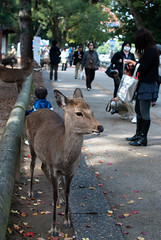
We arrived in the ancient city of Nara and made our way to the large giant city park just east of the Kintetsu Nara station.  The very first thing we noticed were all the deer inhabiting the city.  This must be the largest collection of semi-domesticated deer in the whole world.  Obviously, being the good tourists we are, we took gobs of photos of the giant rodentia and even bought the deer snacks from the streetside vendors.  These deer can be pretty aggressive.  N had a few surrounding her and one or two nudging her from behind.  Thankfully, it looks like all the deer have their horns trimmed right down to prevent unnecessary gouging.

We kept walking deeper and deeper into the park and there were more and more deer everywhere.  There were sleepy deer who must have had enough food from tourists for the day.  There were deer standing in the middle of the road waiting for cyclists and vehicles to go around them.  There was one deer lapping up water in a tiny stream by one of the temples.  Then my favourite deer of all was the iron-deficient deer who was chewing on the tough metal chain-links of a fence.  Mmm...tasty...

Our first big destination of the day was Todai-ji [東大寺].  This is the largest wooden structure in the world which also houses the largest statue of Buddha.  What is even more amazing is that the temple is only a reconstruction of what was an even larger original wooden structure.  The current great hall of Todai-ji is actually 30% smaller than its predecessor!  The original building must have been even more impressive.


Just behind the giant Buddha statue is a giant wooden column with a hole at the bottom.  The hole is apparently the same size as Buddha's nostril.  Apparently, the belief is that those who can squeeze through this hole, a representation of Buddha's nostril, then you will attain enlightenment.  Well, we came all this way, so we couldn't pass up this opportunity.  However, it was a lot more fun to watch people trying to squeeze through than it was actually doing it.  I actually had to go through twice because N's camera didn't work the first time around so I lined up again.  Does that make me doubly enlightened or did the second time around nullify my enlightenment?

What was even more fun was a Japanese motorcyclists who tried to squeeze through.  First of all, he was still wearing his bulking riding pants complete with buckles.  Second, it looked like he had contorted his body the wrong way in order to pass through.  My, was he ever stuck in that hole or what?  A tourist complete with netbook and webcam saw the proceedings and recorded everything directly onto his hard drive.  I don't think the guy ever made in the end after two attempts.  To add salt to his wounded pride, a little kid went right after him with no difficulty whatsoever.  Everyone had a good laugh at the biker's expense.
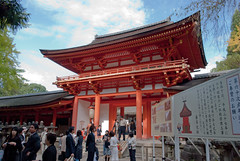

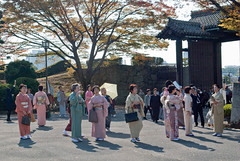
After Todai-ji, we walked a long walk towards Kasuga Taisha [春日大社].  This is probably the most important Shinto shrine in Nara.  It was really busy this Sunday because many families had brought their children for the 3-5-7 celebrations.  So many well dressed families in Western and traditional garb.  Some of the kids' clothing were hybrid traditional Japanese and Western dress.  We thought about exploring the deep interior of this shrine, but decided against it when we saw the crowds and thought it was enough to just see the outside and part of entrance area.  It was just fun people watching Japanese families during this time of ritual.
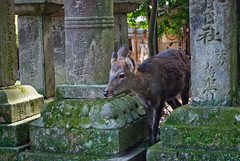

We head back down towards the train station, but not before passing through a lane lined with stone lanterns on either side.  Many a deer were poking their heads out in between the lanterns.  Cute little rascals when they leave me alone.  I guess as long as I'm not feeding them, I'm not getting tugged on and nudged at.  The stone lanterns were quite impressive and some of them had characters engraved on them.  I got the impression that the characters were usually the names of people who had perhaps donated to erecting these stone lanterns.  I think a few of the lanterns even had corporate sponsors from the looks of it.


We took a different road back to the train station and happened upon a little market area.  I suspect we had come across the northern section of the Naramachi shopping area.  There were a lot of folks milling about on this Sunday morning.  So we could resist grabbing a little something to eat while in this area.  We lined up for a little green tea mochi snack with a peanut type powder sprinkled over it.  Tasty little treat to hit the spot for our next leg of travel.   It wasn't quite lunch time yet so we thought we would wait until Uji before eating.  You'll find out why maybe we should ate first in our next post.  Mostly H's fault this time.
Friday, February 26, 2010

11/7 - Evening in Dotonbori

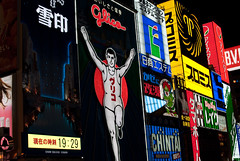
After an afternoon break back at the hotel, we headed back out into the town.  A great area just hang around at night would be Dotonbori [道頓堀].  It's at the southern end of the Shinsaibashi-suji shopping arcade.  You know you've reached Dotonbori when you see all the bright lights and giant neon advertisements lined up right next to the tiny river.

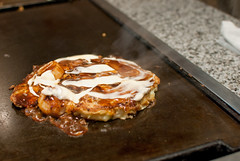
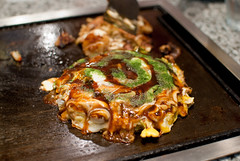
However, our highlight tonight was not the touristy stuff, but our dinner.  We found an okonomiyaki restaurant that was recommended by one of N's travel books.  To a foreigner, you probably wouldn't pick this restaurant out except for the crowd lining outside the door.  At first, I thought the restaurant was really tiny with only 10 seats right up against the cooking area.  The cooks literally cook the okonomiyaki on the giant flat grills right in front of you.  It's pretty neat to see it all, and to smell it all.

Originally, I thought the staff were trying to tell us that the wait would be another 1.5 hours and were asking us to come back.  However, as we were making our way out of the restaurant, the server rushed out and grabbed us and redirected us upstairs.  Upstairs?  I didn't realize there was an upstairs here.  Upstairs actually had tables with mini-grills in the middle.  Good thing the server came out to grab us; otherwise, we would've missed this great meal.

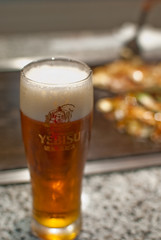
I felt that the occasion called for a glass of local brew.  Yebisu was the brand they were pedalling so I decided to partake in it.  It was a light lager type of beer, but it was pretty tasty.  I'm not a huge light beer fan, but this one was definitely a good one.  We ordered a set meal consisting of two mini-okonomiyakis and one regular, larger okonomiyaki.

After dinner, there was a really long line up.  We were glad that we had gotten a littler early to the restaurant.  Otherwise, we'd really be waiting 1.5 hours for dinner.  We went back to the Dotonbori Bridge and took in the giant adverts.  Even if you don't plan on spending any money, it's great just to stand and bask in the glow of the commercial lights and watch tourists pose as their favourite snack brand athlete, the Glico Man.

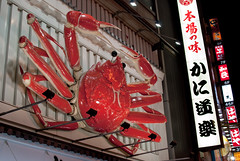
The bright Dotonbori River lights are not the only draw on this stretch.  There's also many larger than life store signs along the pedestrian walk that is directly south of the river and runs parallel to the river.  Right on the corner of the pedestrian walk and the Dotonbori bridge is a giant crab.  It simply dominates this particular corner.  Obviously, the restaurant on which this sign resides sells crab for dinner.  Go figure.

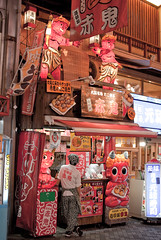
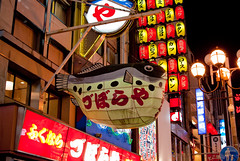
A little further down, there is a variety of other signs.  There's the Red Devil Takoyaki stand complete with red demons adorning the whole front.  There's a giant lit up puffer fish with giant "fugu" hiragana letters noting the presence of a fugu restaurant.  (Every year, a handful of people die eating the poisonous puffer fish).  There's also a Dotonbori icon that looks like a Japanese man with thick round glasses wearing a clown suit decked out in American colours.  A famous landmark and icon to Japanese, but it's not really accessible to those who do not speak Japanese.

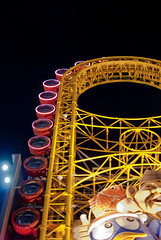
We then headed back to river and walked along the quieter riverwalk.  There was a lot less activity here. There was a giant vertical ferris wheel that wasn't in service, but was definitely lit up in bright neon colours.  Even the main Dotonbori bridge had a touch of light built in underneath the span.

Again, just walking around Dotonbori is nice enough.  You don't even have to really buy anything.  We had walked across to the other side of the river to get back to Shinsaibashi-suji.  However, we soon realized that we were in sort of a red light/night club area.  Oops.  Always be careful where you walk off to, I guess.  Japan is a fairly safe country to walk around, but you likely still want to avoid the shadier areas of town.

Sunday, February 14, 2010

11/7 - Morning in the Market and an Hour in the Bookstore

After running around Kansai for the first few days since we arrived in Japan, it was finally time to have bit of down time and just hang around Osaka itself. We were back again at the Hearton Hotel Shinsaibashi which is very central and within steps of many major shopping areas.  Today was just a day to walk around and explore the areas around the hotel.

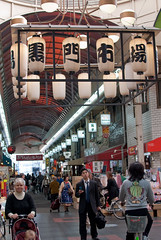
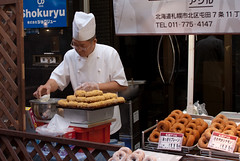
First of all, we slept in this morning.  That was a nice change of pace from our frantic scurrying around of the first few days.  Our first stop of the day was the Kuromon [黒門] Market.  There were lots of fish and veggie stands in this market.  We decided to wander, but my morning hunger was starting to make me "hangry".  So I grabbed a quick snack first.  A small doughnut vendor was making fresh doughnuts right in the market.  It was really fluffy tasting and not too sweet.  I really liked it.  I'd say I would prefer this doughnut over a really sweet Tim Horton's donut.

N's hunger finally started to kick in and we found ourselves in a little seafood place that catered to tourists who wanted to sit down and eat in the market.  From listening to all the guests seated around us, it became quickly obvious that everyone here was Chinese.  There was a quartet of Taiwanese tourists, a group of 8 really boisterous and excitable middle-aged Hong Kong ladies, and two younger Hong Kong women.  The two younger ladies vacated their seats for us.  The middle-aged Hong Kong ladies were definitely the loudest.  For every bit of seafood, they were loudly "oohing" and "awing".  It was pretty funny.  But most Japanese are not so loud, so they really stuck out like a sore thumb.

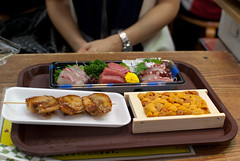
For our food, we had unagi and rice, sashimi and uni (sea urchin).  I don't think I've ever had so much seafood for breakfast.  First the Arima Onsen breakfast and now this one.  Decadent.

After finishing breakfast, we headed down to a shopping area known as Sennichimae [千日前].  One small and tight shopping street in Sennichimae is not your usual tourist attraction.  However, it may be of interest to those who like something ordinary, yet different.  This street specializes in kitchen and restaurant supplies.  Some shops were wholesalers for giant grills and ovens.  Some shops sold tableware.  Some shops specialized in selling different sorts of restaurant uniforms.  It was especially interesting to see some of the traditional Japanese style restaurant clothing that they had for sale.

Further south past Senichimae, we came across a large bookstore.  The bookstore was directly across from a large comedy theatre.  Apparently, this theatre is famous to the locals and Japanese tourists, but it would be useless for us to make a visit to watch Japanese comedy - way over our heads.  The bookstore, on the other hand, kept us occupied for at least an hour.  N was looking at the manga of one Takagi Naoko [高木直子].  She spend quite a bit of time debating whether to buy a couple copies of her books or not.  I was over in the train section. Japanese bookstores literally have a whole bookshelf dedicated to books and mags about their trains.  It's pretty impressive if you're a train fan.

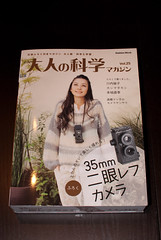
Today, however, what caught my eye was a magazine with a box attached to it.  At first I wasn't sure what this mag+box combo was.  Then I started to realize that there was a DIY camera inside the box.  It was an old style Twin Lens Reflex camera.  This was tres cool, I though.  I looked at the price and it was only ¥2500.  For about CAD$25-30, I thought this was worth the cost.  My only concern when I picked up the mag+box was how to fit it into my luggage.  But what a find!

Thursday, February 4, 2010

11/6 - an evening in Kobe

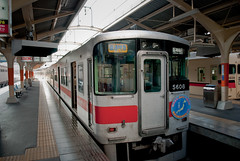
After our post-Himeji Castle lunch, we made our way back to the train station and hopped onto a Sanyo Electric Railway car.  The car didn't leave right away, so I had a chance to wander and take a few photos of the train.  Again, we made sure we were on one of the express trains.  We didn't want to waste our time on the local service train that stopped at the almost three dozen stops between Himeji and Kobe.

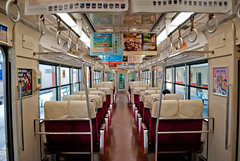
We took the trip back to Kobe and slept half of the way there.  The sun was still beating down and we had to draw down the curtains.  Luckily in Japan, most transit comes with some sort of shade or curtains that you can draw in order to block the sun from shining right in your eyes.

We arrived back in Kobe and made our way to the unique neighbourhood of Kitano [北野].  Kitano is well-known for its collection of European-style buildings.  Kobe was one of the early contact ports between foreigners and the Japanese.  So many of the foreign powers had residences and buildings for their representatives.
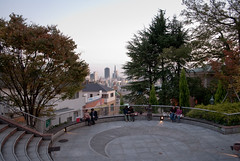
The neighbourhood was a quick jaunt up from Shin-Kobe station, but we were looking for a particular part of Kitano.  We were looking for small circular plaza overlooking Kobe and in front of an infamouse European-style building, sometimes known as the Weathervain Home because of the weather vain on top.  I think it also goes by a few other names, as well.


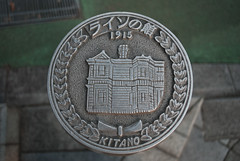
As dusk fell, we finally found it after winding up the hill's many little pedstrian alleyways.  It had a nice few of Kobe, but not a very expansive one.  A few people were just sitting around enjoying the warm autumn weather.  We found another one of those stamp stations common to Japan's tourist sites and collected our Kitano stamp.

We wandered more around the old foreign residences, but many were now closed for the day.  So there was no way to see the insides of one of these unique buildings.  Giving up on spending more time in Kitano, we started heading back down the hill to Shin-Kobe Station.

Our next stop was to head to Kobe's waterfront area, sometimes known as Harborland.  At least that was the name of the subway station we got off at.  From the subway station, we had wind our way under a highway overpass and several shopping malls before actually reaching the water.  It must have taken at least 15 minutes from the station to the water.

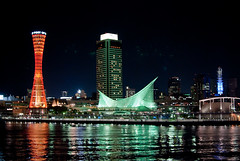
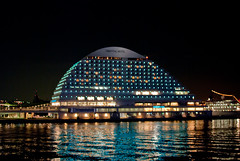
Kobe has some beautiful buildings along the water.  One is the Kobe Tower which stands like a giant elongated Japanese drum covered in a neon weaving of red lights.  In the shadow of the tower is the Kobe Maritime Museum.  Its giant lattice structure is lit up in a fluorescent green that stands in contrast to the adjacent Kobe Tower's red.  Further down the pier from the tower and museum is the large curvilinear building of the Oriental Hotel in Merikan Park.  These three buildings are quite easily some of the most recognizable buildings in Kobe.

 
We wandered a little more in the Mosaic Gardens shopping area to see if we could find some Kobe beef to have for dinner.  There was a place that had Kobe beef, but only as a part of their ramen meals.  It wasn't a full-blown Kobe beef restaurant.  We were looking for the real deal.  As we walked around, we came across a boardwalk amusement area complete with giant colour-changing ferris wheel and a double-decker merry-go-round.  Also, there was a strange little gazebo where you and a partner were encouraged to shake hand with your right hands and grab onto a fixed stick with your left hand.  Once you shake hands, it looks like the gazebo lights up in a variety of different colours.


We were getting hungry by this point and we hadn't found what we were looking for.  We made our way back to Kobe's transport hub of Sannomiya [三ノ宮].  Our feet were starting to tire of schlepping around looking for Kobe beef.  We settled on a quick dining outfit known as Yayoiken.  It was complete with a vending machine to order and pay for your food after you sat down.  Or you could do it in the other order if you so choose.  I had a tonkatsu meal while N had a croquette meal of some sort.  (I'm getting bad at remembering what we ate).  It was a quick meal and we were about ready to head back to Osaka.


However, we came across a busy little window underneath the overhead train station.  There was a long line up for this tiny little window. It looked like they were selling gyoza and buns.  I am a gyoza freak.  N knows this very well.  So we lined up and bought a box of gyoza and some pork buns to snack on later back in Osaka.  The place was called Ikkanrou.  We later found out that it was a fairly famous food institution in Kobe.  Good stuff.  We didn't miss out on some of the local specialties, then.  Unfortunately, the gyoza was cold by the time we got back into the hotel in Osaka.

Sunday, January 31, 2010

11/6 - Himeji Castle

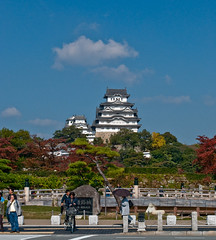
If you can only visit one castle in Japan, then it should be Himeji Castle.  It's a little out of the way, but it's well worth the trip.  This is the Japanese castle.  When I came back, my coworkers asked me if it was a real castle. Well, yes, it's a real castle.  Some of them also asked if anyone actually lived in there.  Then I realized that they were thinking of castle from a European perspective.  Castles in Europe were often where royalty and nobility lived.  I don't think a Japanese castle falls under exactly the same category.

Himeji Castle was the centre of activity and power in the area.  Japanese castles are more famous for their defensive and architectural elements.  From the many signs around the castle site, it explained how the castle would be last defense if the area were attacked.  They could huddle all the soldiers into the castle and form an impressive defense against any attackers.  The main tower itself was more of a storage and keep than a living quarter.  So in this way, it's very different from a European castle which were often residences.

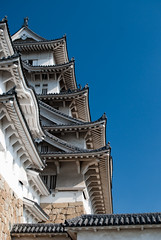
We walked up the main street from the train station to Himeji Castle.  The giant white building can be easily seen from the end of the main road.  It is an impressive structure as you get closer.  There were also many other tourists in town - Japanese and non-Japanese.  It was a beautiful and sunny fall day.  We spent most of the time holding our jackets in our arms as we went around the castle grounds.

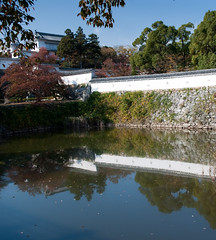
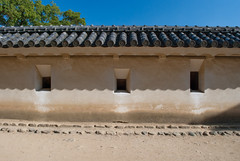
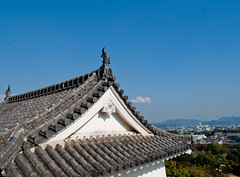
The castle grounds are made up of many buildings, but we were only really interested in the main tower.  The very front of the castle grounds are free to the public.  It's only when you approach closer to the main keep, that you must pay for admission.  Once past the admission gate, we started a series of twists and turns that took us further up towards the main tower.  It was like spiralling around the main tower to get up to the top.  There are many beautiful examples of roof tiles at Himeji Castle. In fact, there is a whole collection of different roof tiles on the buildings.


We finally reached an expansive, flat, upper area where you could look out over the town around the castle.  That's also where the main entry to the main tower was.  We went in, but there were no lights anywhere in the castle.  It looks like the Japanese were looking to preserve Himeji Castle in its original state as much as possible.  The only sign of modernity in the castle was the emergency fire equipment that was placed all around the building. 

Upon entry, we had to take our shoes off.  The ladies at the door gave us all a plastic bag so we could carry our shoes with us as we trekked upwards through the tower.  The main tower was six stories of steep stairs and large empty spaces.  The empty spaces were meant to house food and weapons in case of an attack on the castle.  Each floor was quite wide.  Again, there were no artificial lights.  So we were lucky that it was sunny outside; otherwise, we'd have a lot of trouble seeing inside the castle.  Because of the lack of lights, it was also very hard to take pictures inside the castle.  My best inside picture would be of a rack of rifles displayed on the weapons storage floor.

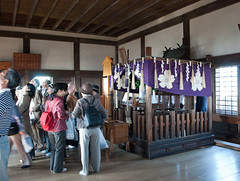
Once on the top floor, the natural light really pours in with the larger windows.  There's a little shrine built on this floor.  I'm not sure what the shrine was about because I didn't want to lose my spot in line for going back down.  However, many Japanese took the time to pay repsects at the shrine.

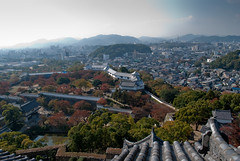
Also, there was a great view of the surrounding castle grounds.  To the west, there was another building on the castle grounds known as the West Bailey.  Then eastwards, on the way down, you could see the roofs of some of the adjacent castle buildings.
After a couple hours in the castle, we were really hungry.  It was already 2pm, so we had missed most of the lunch rush outside the castle.  There are a few restaurants directly across the road from the castle grounds.  We grabbed a quick bite and drink for lunch.  Then when we were on our way again back to Kobe.

Friday, January 29, 2010

11/6 - Arima Onsen to Kobe to Himeji

We knew today would be the day that we'd be in transit a lot.  First, we had to get from Arima Onsen to Kobe.  We were lead to believe that the bus would accept our Kansai Thru Pass.  However, after the somewhat twisty ride down the mountain and a long journey through a tunnel to the seaside metropolis, we found out from the driver that our cards wouldn't work.  We had to fork out about ¥2400 out of our own pockets.  Thank goodness Japanese buses give change!


After leaving the bus, we had to walk a while to find the correct train station. We were in the Sannomiya area of Kobe which is the central train hub for the city.  However, there are like 3 or 4 different Sannomiya stations, so we had to figure out where the Hanshin Railway station was.  When we finally found it, we unloaded our extra bags into a coin locker for the day.  That way, we didn't have to lug around too much stuff while we visited Himeji for the afternoon. 


We entered the Hanshin Sannomiya station and boarded an express train to Himeji.  Himeji is 60km west of Kobe and a one-hour journey by train. So we were very happy that we caught the express instead of the milk run that would stop at every single stop between Kobe and Himeji.  The Seaside Express was a wonderful ride.  It didn't really start that way because we were underground at first, then the train passes through the outer suburbs of Kobe.  However, once you get out of the burbs, the sky opens up and the sea is in full view to the left of the train.  It was a beautiful and clear day.  The rays of sunshine glistened off the waves and whitecaps of the ocean.  I think N may have missed most of it as she nodded off beside me.  Even the couple across from us were pretty sleepy.  For whatever reason, I didn't take my camera out at that moment, but just took in the whole view.
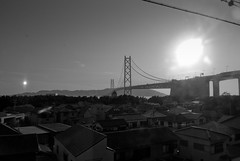
We passed the very imposing Akashi-Kaikyo Bridge that connects the main Honshu island to the much smaller Awaji Island.  For those who are into bridges, I'm sure that they would want to make a pilgrimage to this bridge that spans a pretty wide strait.  I didn't get a picture of the bridge on the way to Himeji, but I did get this shot on the way back.


After an hour, we arrived in Himeji.  I also eventually caught a little bit of shut eye along with N.  We exited the Sanyo Himeji Station and walked up the main road to Himeji to our destination - Himeji Castle.

Thursday, January 28, 2010

11/6 - Mochi Pounding

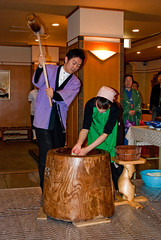
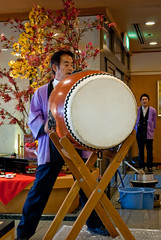
Taketoritei Maruyama has a special treat every morning.  They set up the lobby with a few tables and a giant hollowed tree stump and a taiko drum.  It seems like a strange set up until everyone takes their places and the glutinous mound is placed in the tree stump.  It's a mochi pounding.
Every morning, the ryokan's staff put on this performance of a mochi pounding.  The older gentleman bangs the taiko drums and gives the pounders and mixers a beat to work with.  On one beat the pounder wails down upon the formless mound of glutinous rice.  The next beat, the mixer puts their hand in the stump to move the mochi.  The pounding is definitely as much about the cooking as it is about the performance.  Beat and hammer, beat and hand, beat and hammer, beat and hand.


You're always worried that the mixer may mess up the timing and accidentally stick her hand in the wrong moment or just leave it for a little too long.  I wonder if they practice to get it all right.


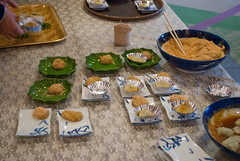
After all the beating and pounding and mixing, they take the mochi to a table and portion out two little mochi balls per dish.  Then they roll some of the balls in a powder that was sweet.  Some of the balls and add sauce to the mochi balls.  Then there was some sort of other sauce or dressing that was actually quite sour and bitter to me and I really did not enjoy that mochi.

However, the whole experience of watching the pounding of the mochi and eating it fresh right after, that was quite special.  The mochi pounding was the last of our events at Taketoritei Maruyama.  We went back up to our room, packed our bags, and checked out.  We cleared our tab and we were sent back into the middle of town.


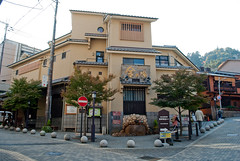
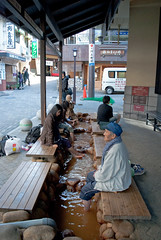
We had quite a while to wait for our bus into Kobe, so we wandered and came across the Kinnoyu Onsen.  By its name, I imagine it takes advantage of Arima's natural kinsen water, the milky and silky golden bath.  Outside Kinnoyu, N decided to partake in the free foot onsen.  As she sat down, she was about to sit down at the bench furthest to the right.  An old man was there and said something, but we weren't sure what he said.  Once N dipped her feet in, I think she kind of put together what the old man said.  The part of the foot onsen furthest to the right was the hottest section of the foot onsen.  Oh and did she feel it.  She quickly scooted to the next section to the left.  It was hot, but just not quite as hot.

After the quick dip of N's feet and me just wandering and taking pictures, we went back to the bus stop and hopped on the bus to Kobe's central Sannomiya area in order to make a connection to a train bound for Himeji.